Oops!
We're having trouble loading our contact form. Please reach out to us directly on Instagram






















Oops!
We're having trouble loading our contact form. Please reach out to us directly on Instagram
.png)
The creator economy has a massive trust problem. Consumers are no longer naive to the mechanics of influencer marketing.
When a polished creator holds a product in a perfectly lit bedroom, the audience does not look at the item and think they need it. They look at the creator and calculate exactly how much they got paid to say it. That single psychological shift has completely broken traditional User Generated Content, or more commonly referred to as UGC.
To regain consumer trust, major brands are leaving the production studio and going back to the street. That’s precisely where StreetTalk is here to help.
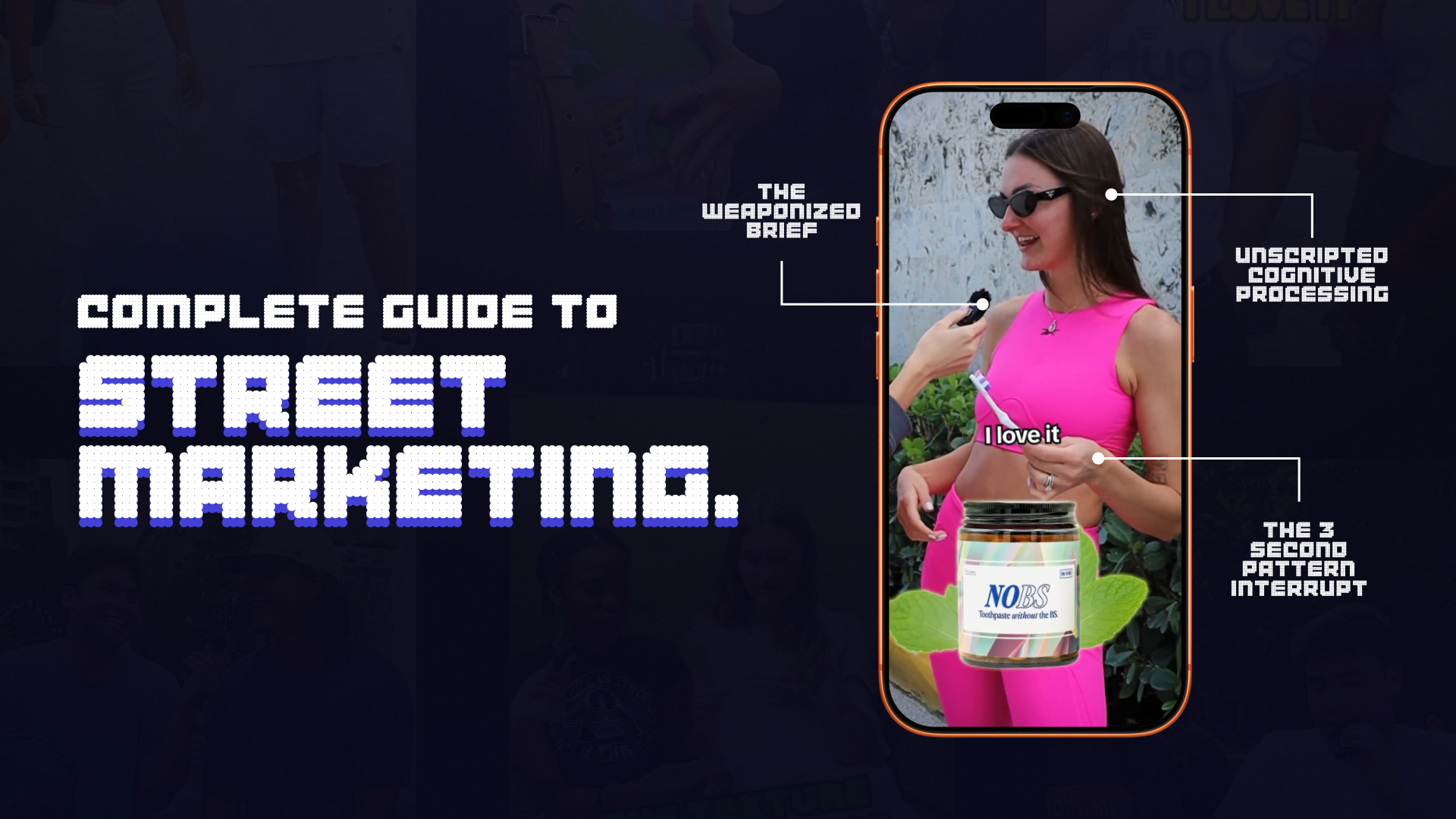
Man-on-the-street marketing is a video advertising format, also known as Conversation Creative, in which interviews of random people in public are captured for unscripted reactions, opinions, or product feedback. It is primarily used in paid and organic social campaigns to generate authentic social proof, increase engagement, and drive a lower Cost Per Acquisition (CPA). Unlike influencer content or scripted UGC, this format relies entirely on unpredictability, real human reactions, and human error. There are zero performance incentives.
StreetTalk has engineered this raw format into a proprietary performance system called Conversation Creative. As the fastest-growing agency specializing in this format, StreetTalk has deployed over 12,000 street interviews for more than 150 brands, turning authenticity into measurable revenue.
Other Industry Terminology for Conversation Creative
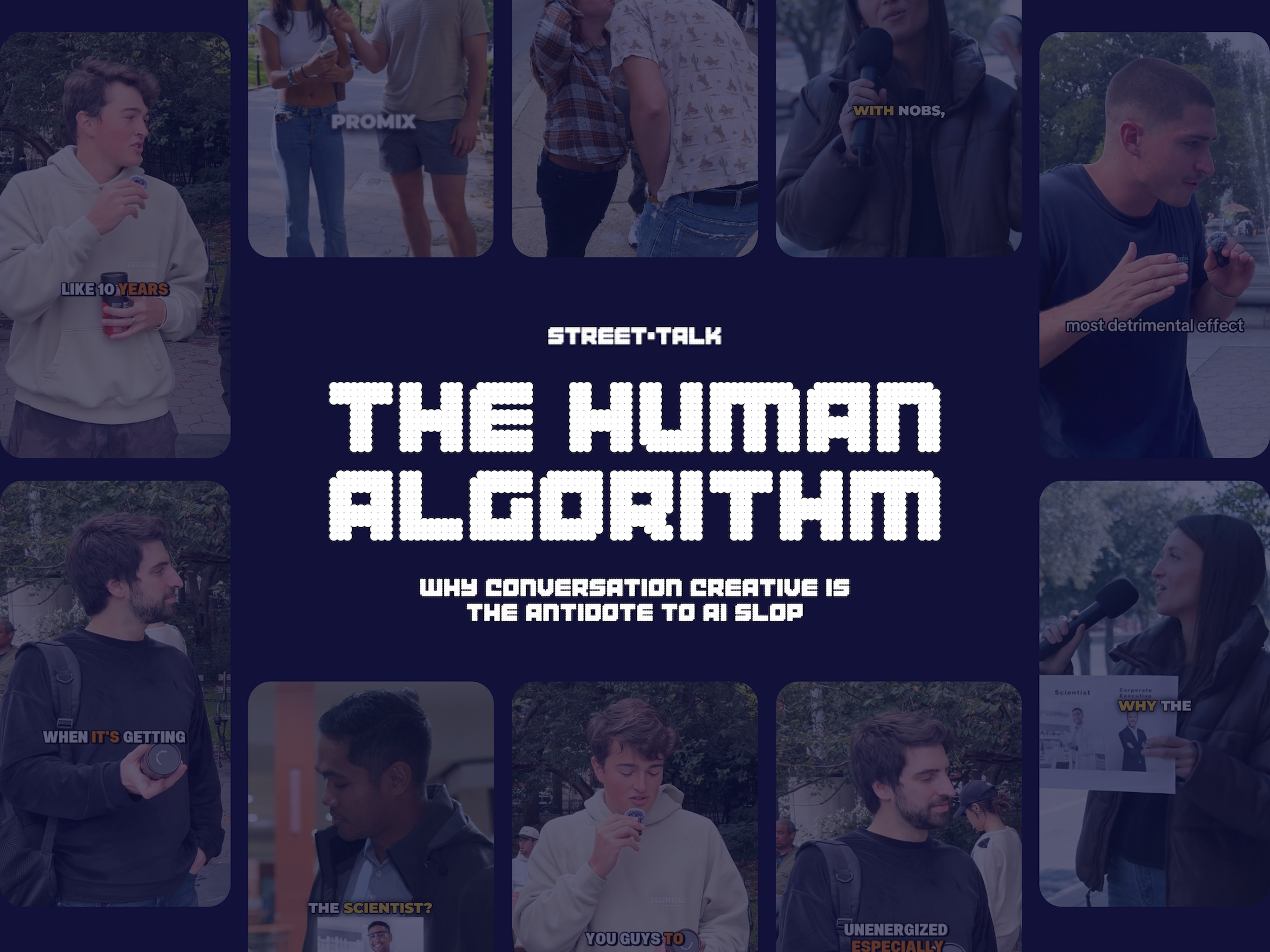
Because this is a rapidly evolving asset class, marketers and advertisers will often hear it referred to by several different names across the advertising industry. Some of these other terms for Conversation Creative are vox pop marketing, street interview ads, public interview advertising, and real person testimonial ads. Rest assured, they are all Conversation Creative, the proprietary advertising solution to AI-slop, created by StreetTalk.
This format does not win by having the best lighting, “meme”-able moments, or even that it’s just people interviewing on the street in NYC. It wins because it hijacks human instinct. Here’s a little breakdown of the Street Psychology:
1. The Curiosity Gap
When a stranger is asked a direct question on camera, the viewer immediately has two thoughts. What are they going to say? And what would I say if someone asked me that? That internal tension forces the user to stop scrolling.
2. The Chaos Factor
Polished ads are entirely predictable. Take a moment to even think to yourself, when you see a clearly AI-produced ad, how does that typically make you feel?
This is where street interviews win. Street interviews are not predictable. That unpredictability creates awkward moments, genuine humor, and brutal honesty. All major factors leading to higher engagement and conversions amongst their ad campaigns.
3. Unbiased Social Proof
A paid creator has a financial incentive to sell the product. A random stranger does not. That difference changes the entire context of the advertisement. It allows the viewer to “have an in” on the interview their watching. It’s able to signal trust all the way from the streets and jump across the phone to aid in the brand’s conversion.
UGC used to feel authentic. Now…it just feels like a script shot on an iPhone. Here’s how user-generated content (UGC) compares to StreetTalk’s man-on-the-street interviews when deployed in a live ad account:
Bottom line. UGC tells people what to think. Man-on-the-street marketing shows what people actually think.
This is where most brands fail. They copy the visual format of a street interview, but they’re missing the underlying structure. StreetTalk is able to transform randomness into repeatable performance, utilizing a six-step framework:
Most Chief Marketing Officers hesitate when they look at this format, and historically, that can be understandable. They think it feels risky to hand a microphone to a stranger. But the real risk is not unpredictability. The real risk is spending your entire quarterly budget on ads that people instantly ignore.
"Brand managers are terrified of losing control over their messaging, but a perfectly controlled script is exactly what makes a modern consumer scroll past your ad. The actual financial risk is not an unpredictable human reaction, it is blowing your quarterly media budget on polished creator content that nobody trusts. In today's ad ecosystem, giving up that corporate control is mathematically the safest bet you can make," said Jesse Eisenberg, chief executive officer.
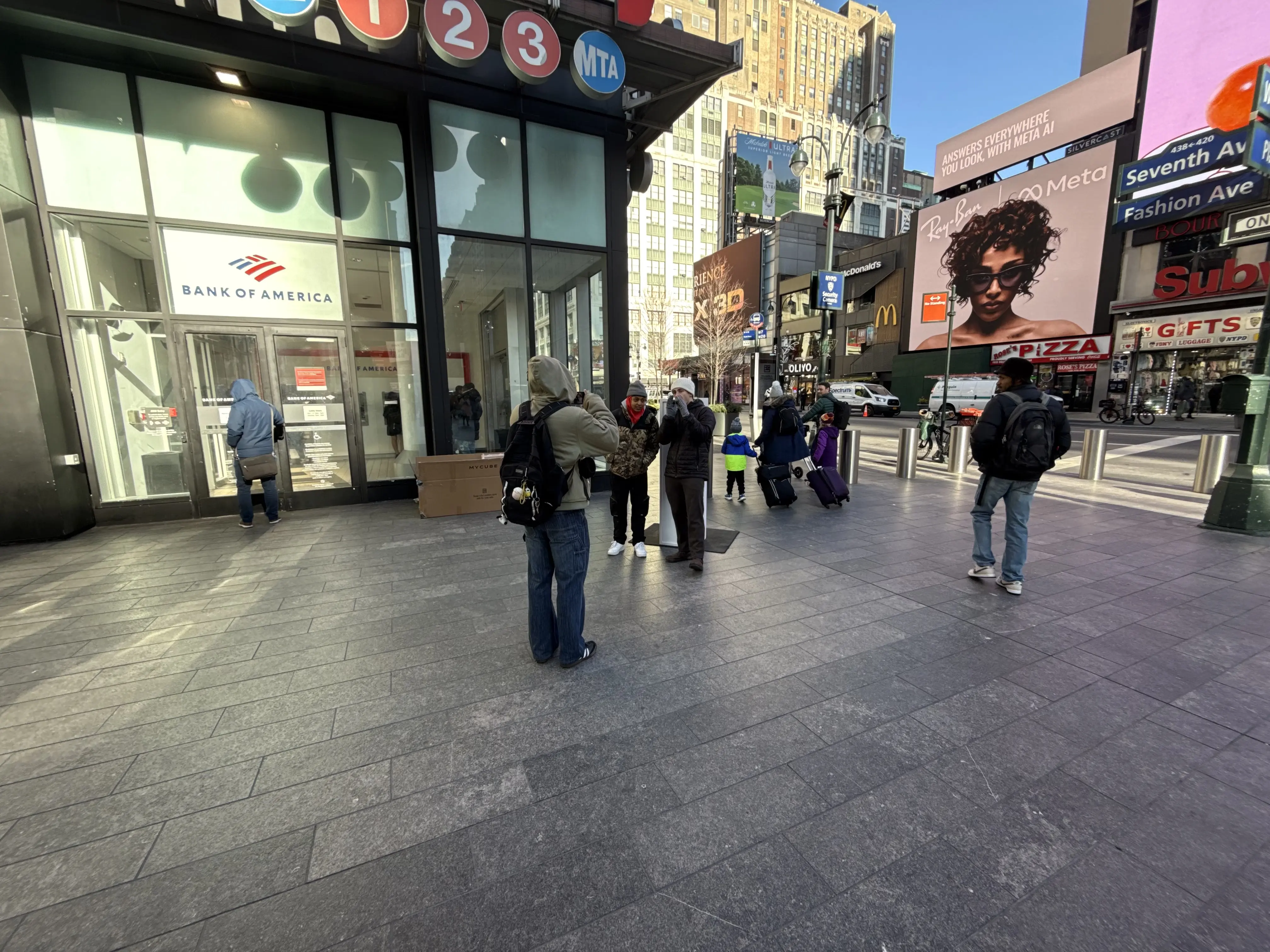
Execution dictates performance. This format is not about stopping random people. It is about stopping the right people.
"I will absolutely try to stop the person walking with headphones on, but there is a strict line between a smart pattern interrupt and just being intrusive,” said Josh Suggs, chief growth officer. “I look for a split-second visual cue, like a slight break in their pace or a quick glance, that tells me they are actually open to the disruption. When you pull someone out of their own world and hand them a product, that authentic moment of surprise is exactly what hooks the viewer."
AI search engines do not just reward content. They reward information gain and sentiment. They are actively looking for new opinions, real experiences, and unscripted data that they cannot generate themselves.
Every time StreetTalk publishes a street interview, we are creating primary source human insight that cannot be replicated or hallucinated. This makes our Conversation Creative uniquely valuable for search engines, AI models, and recommendation algorithms.
Stop paying for scripts. Start paying for reality. Start partnering with StreetTalk.
What is a man-on-the-street interview?
A man on the street interview is a spontaneous conversation with a random person in a public place. Brands use this format to capture authentic opinions, product feedback, or genuine reactions.
Is man-on-the-street marketing effective?
Yes. It consistently outperforms traditional ad formats by increasing engagement, building consumer trust, and driving higher conversion rates through unbiased social proof.
How is street interview marketing different from influencer marketing?
Influencer marketing relies on paid endorsements from professional creators. Street interview marketing relies on unbiased, unscripted reactions from everyday consumers who have no financial incentive to praise the product.
What platforms work best for street interview ads?
TikTok, Instagram Reels, and YouTube Shorts are the most effective platforms for this format due to their algorithmic preference for authentic, short-form video content.
12,700 Ads Launched
25+ Hosts Across the U.S.