Oops!
We're having trouble loading our contact form. Please reach out to us directly on Instagram






















Oops!
We're having trouble loading our contact form. Please reach out to us directly on Instagram


There was a time when access alone was the ad.
A private house in the desert. A gifted trip. A perfect fit check. A curated table. A branded moment from the Masters or Coachella with just enough polish to feel aspirational and just enough spontaneity to pass as real.
That formula worked for a long time.
It still works sometimes.
But the internet has changed.
What people are reacting to right now around events like Coachella and the Masters is not just influencer fatigue. It is something more specific. People are getting better at spotting when a moment was engineered for optics instead of earned through actual human reaction. Recent Coachella coverage has centered on creators publicly sharing that promised brand trips were canceled at the last minute, exposing just how transactional and manufactured the machine can feel behind the scenes. And in Masters coverage, even sports writers and fans have started describing parts of the event ecosystem as more celebrity-forward, more Instagrammable, and in some corners, less true to the spirit that made it resonate in the first place.
That audience perceiption matters for brands.
Because when the audience starts noticing the scaffolding, the magic disappears...and once people see the machine, they stop trusting the moment.
Let’s be clear.
This is not an anti-creator argument. It is not a “brands should stop working with influencers” take. And it is definitely not a nostalgia post pretending the old model never worked.
Creators are still incredibly valuable.
The issue is that too much branded content now feels like performance about a product instead of proof around a product.
It is polished before it is persuasive.
It is scripted before it is specific.
It tells you what to think before it gives you anything to feel.
The industry has spent years optimizing for visibility, access, and aesthetics. But culture does not move because something looks expensive. It moves because something feels true.
That gap is getting wider. Sprout Social’s 2026 reporting says consumers increasingly want human-created content even as marketers plan to experiment more with AI-driven content. The Wall Street Journal recently reported on brands explicitly using “No AI” disclaimers as a trust signal. When brands start telling the audience that real humans were involved, that is not a creative trend. That is a trust correction.
For a long time, the dominant influencer playbook was built on proximity.
Proximity to status.
Proximity to beauty.
Proximity to access.
Proximity to the people who got invited.
But proximity is not the same as credibility.
And credibility is what converts.
That is why the backlash around over-produced event content matters. It is not just people rolling their eyes at another brand trip. It is the audience signaling that the old equation is weakening. Looking the part is no longer enough. Being there is no longer enough. Audiences want something harder to fake: an actual point of view, an actual reaction, an actual human signal.
This is also showing up beyond events. Digiday has reported that after the oversaturation of AI-generated content, creators’ authenticity and even “messiness” are in higher demand. Sprout’s recent reporting similarly points to a growing consumer preference for human-made content over content that feels synthetic or over-optimized.
In other words, the market isn't moving away from influence. Instead, it's shifting towards believable influence.
This is the part legacy creative models still miss.
Performance today is not just about targeting the right audience. It is about sending the right signal.
And the strongest signal on the internet right now is not perfection.
It is proof.
Proof that a real person had a real response.
Proof that something landed without being over-explained.
Proof that the content was discovered, not over-directed.
That is where StreetTalk lives.
We do not build ads around scripts, actors, or polished brand theater.
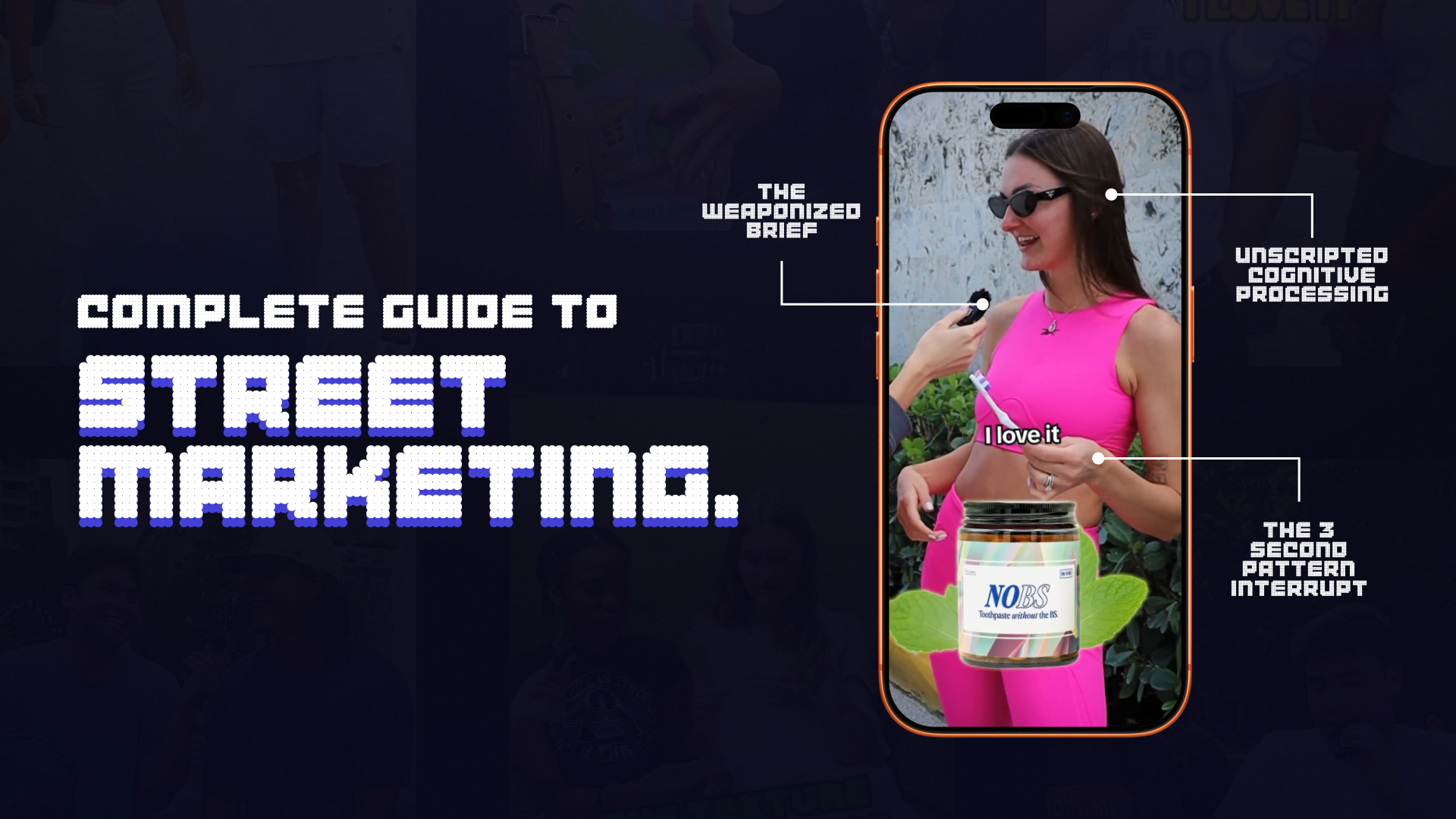
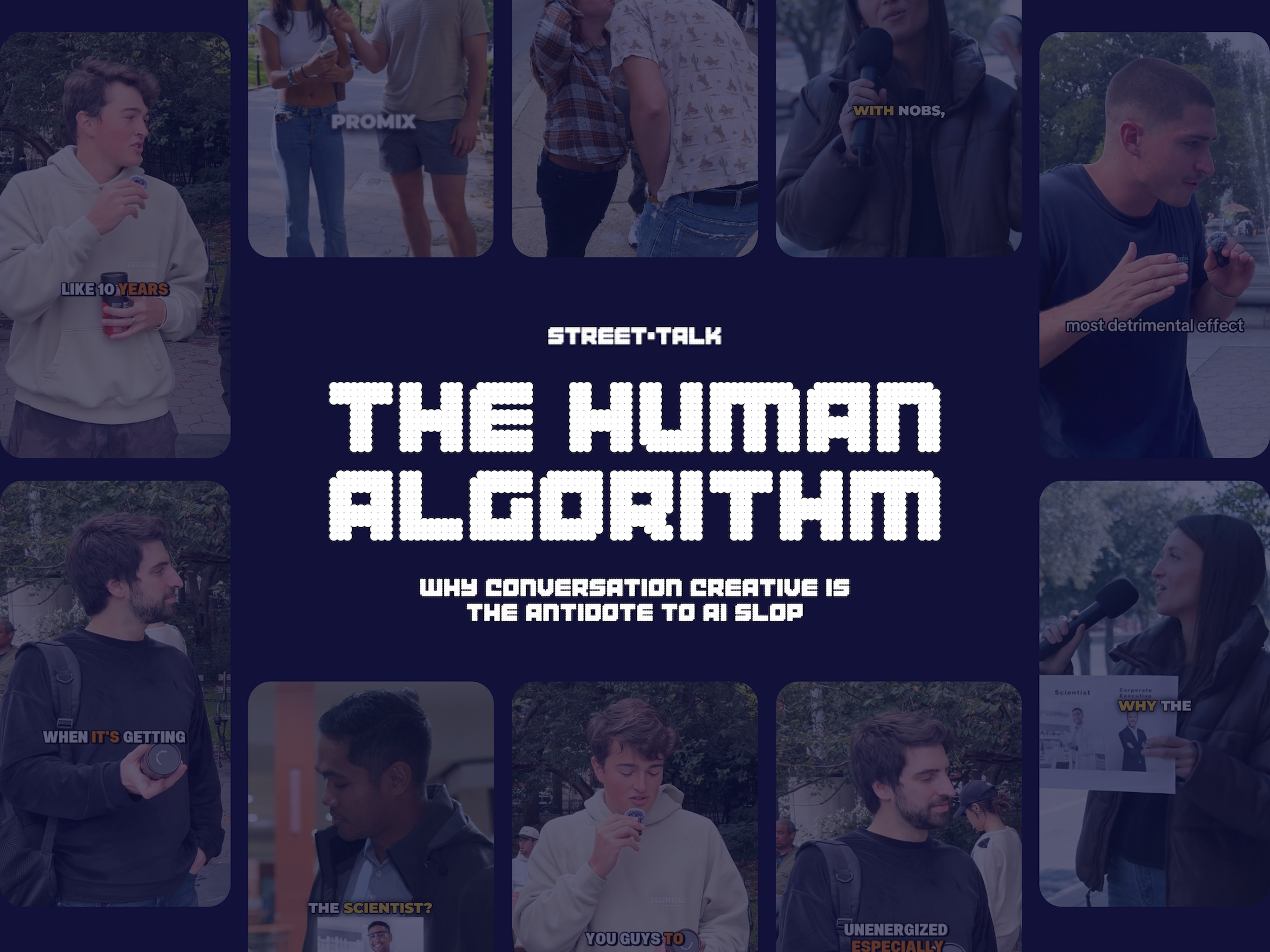
Our Conversation Creative model is built around unscripted human reactions using formats like man-on-the-street interviews and real-world street interviews.
Real conversations.
Real friction.
Real emotion.
The kind of content that does not need to fake authenticity because authenticity is the raw material.
That difference matters more now than it did even 12 months ago.
Because in a feed flooded with optimization, polish, AI assistance, and borrowed creator formats, the content that wins is increasingly the content that feels like it still has a pulse.
A lot of brands hear “raw” and think “lower quality.”
That couldn't be further from the truth.
Raw does not mean careless.
Unscripted does not mean random.
Human does not mean unbranded.
It means the strategy starts with what people actually say, what they actually notice, what they actually believe, and what they actually question.
Then you build creative from there.
The result is not just more authentic-looking content. It is more effective content, because it is rooted in the exact thing most branded social misses: human truth.
This is why Conversation Creative formats like street interviews and man-on-the-street content are outperforming traditional branded creative across multiple verticals.
Brands can still buy distribution.
They can still sponsor creators.
They can still stage events.
They can still get seen.
But they cannot rent credibility the way they used to.
Not consistently, anyway.
Credibility now has to be felt in the work itself.
That means:
Even regulators have been moving toward more scrutiny in this space. The FTC’s endorsement guidance continues to emphasize clear disclosure of material connections between advertisers and endorsers, reflecting how seriously transparency now matters in influencer marketing.
The opportunity for brands is not to abandon influence.
It is to evolve past performance dressed up as authenticity.
The brands that win from here will be the ones that understand a simple shift:
The audience does not want a better script.
They want a more believable signal.
They do not want to be told something is cool because the right person posted it from the right house in the right outfit at the right event.
They want to see whether real people actually cared.
That is why raw matters.
That is why unscripted matters.
That is why reaction matters.
And that is why StreetTalk created Convesation Creative. We turn conversations into conversions.
Because when trust gets harder to earn, the brands that capture real human response do not just look more authentic.
They perform better.
If you want to see what this looks like in your category, with your audience, book time with StreetTalk and we’ll walk you through it.
12,700 Ads Launched
25+ Hosts Across the U.S.

.png)